

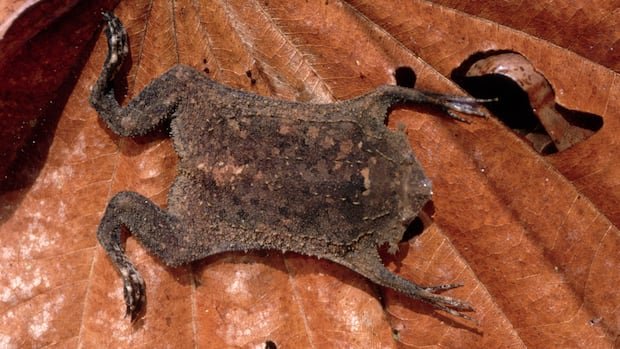

In a fascinating discovery, researchers in California have found that the Surinam toad possesses a unique ability to sense prey using its fingertip lobes. Despite its unconventional appearance and limited eyesight, this amphibian, commonly known as the star-fingered toad, exhibits remarkable hunting skills in the murky waters of the Amazon basin.
Through a recent study led by neurobiologist Duncan Leitch at the University of California, Los Angeles, it was revealed that the toad’s fingertips play a crucial role in detecting subtle water movements caused by nearby prey. These specialized lobes, akin to touch-sensitive organs, resemble the high-resolution sensors found in the human eye’s central region, enabling the toad to discern the size and proximity of potential meals.
The research, published in the Journal of Comparative Physiology A, highlights the toad’s ability to swiftly capture prey without direct physical contact, showcasing its remarkable sensory capabilities. With each finger containing 128 sensitive lobes covered with papillae, these structures significantly enhance touch sensitivity, allowing the toad to detect and capture prey with precision.
Moreover, the study underscores the disproportionate allocation of sensory processing resources in the toad’s brain towards its fingertips, emphasizing the evolutionary adaptation of this unique hunting strategy. This discovery sheds light on the sophisticated sensory mechanisms employed by amphibians, offering insights into the evolutionary pathways of vertebrates in adapting to environmental challenges.
Lea Randall, a senior manager at the Wilder Institute in Calgary, noted the significance of this finding, highlighting the evolutionary convergence between frogs and mammals in developing specialized sensory systems. The study’s implications extend beyond the amphibian realm, providing valuable insights into the evolutionary processes that have shaped sensory adaptations in vertebrates over millions of years.