


Australian researchers have introduced the world’s inaugural public tool designed to assess the climate impact of fossil fuel projects, with a Canadian offshore oil venture serving as a demonstration. The newly developed Carbon Impacts Tracer tool can forecast the implications of proposed mines, offshore oil structures, or other energy initiatives on global warming, glacier melting, and potential human fatalities. Sarah Perkins-Kirkpatrick, a climate science professor at the Australian National University, highlighted during a virtual press briefing that the tool links emissions linked to individual fossil fuel schemes to their contribution to planetary warming and subsequent impacts resulting from that warming.
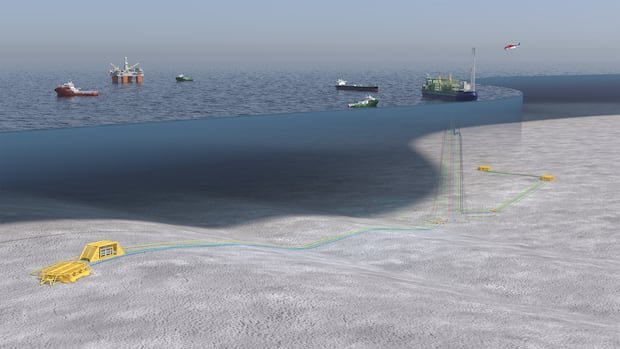
The online platform utilizes a project’s projected carbon dioxide emission data, often sourced from the proponents’ environmental assessment documents, to determine its effect on global temperature escalation. Subsequently, it references peer-reviewed research to evaluate the tangible consequences of this temperature increase, such as coral reef degradation, declines in food production, and job losses. The tool was launched with case studies on five Australian projects, one in the U.K., and the proposed Bay du Nord offshore oil project, which could potentially be Canada’s premier deepwater oil endeavor situated around 500 kilometers east of St. John’s.
The initiative, led by Equinor, a Norwegian energy corporation, is anticipated to tap into over 430 million barrels of oil reserves. According to the tool, CO2 emissions from the Bay du Nord project may reach 188 megatonnes over two decades, contributing a minute 0.00008 degrees Celsius to global temperatures. Furthermore, the tool suggests that this volume of CO2 could expose over 111,000 individuals to extreme heat and result in 25 heat-related fatalities in Europe alone. The tracer indicates potential glacier loss of 4.6 square kilometers due to Bay du Nord, leading to a sea level rise of 0.025 millimeters. Additionally, it forecasts around 2,100 job losses due to pollution from the project, pushing roughly 9,800 people into severe poverty.
Equinor did not provide an immediate response to requests for comments on Monday. Joel Finnis, a climatologist at Memorial University in Newfoundland and Labrador, though not directly involved in the tracer project, is part of a local team studying the impacts of the region’s oil and gas sector. He emphasized the comprehensive nature of the tracer tool, consolidating various research outcomes into an understandable format for the general public.
Maria Nawaz, heading the climate change accountability project at the University of New South Wales’ Australian Human Rights Institute, expressed that historically, linking fossil fuel projects to their real-world repercussions has been challenging. She believes the tracer tool can aid governments, regulators, and the public in evaluating proposed projects in their regions, potentially enhancing climate litigation efforts to hold entities accountable for their emissions. Nawaz envisions applications of the tool by insurers to assess project risks and economists to project economic consequences.
The tool currently assesses impacts solely on proposed projects, not existing oil wells or mines, with plans to incorporate more prospective developments as data becomes accessible.