

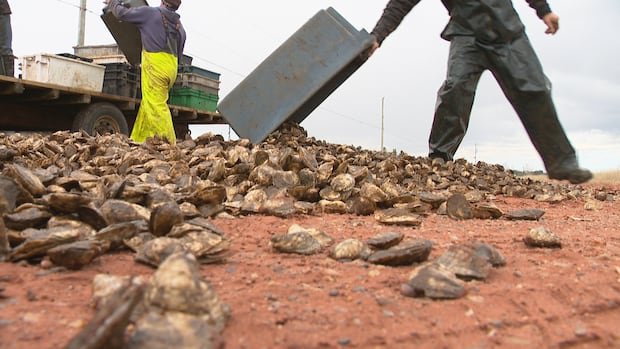

Oyster farming on Prince Edward Island is in crisis as two diseases threaten the industry, leaving farmers devastated. Kaila and Bruce Richard, who inherited their farm in Dock River, have seen their hard work jeopardized by the diseases, causing significant losses among local farmers. The couple, along with others in the area, are facing a dire situation with mortality rates reaching up to 95%.
The diseases known as MSX and dermo were first detected in P.E.I. waters in 2024 and 2025, respectively, proving fatal to oysters. The federal and provincial governments have introduced support programs to aid affected farmers, including financial relief and the importation of disease-resistant oyster seed. However, the recovery process is lengthy and uncertain, requiring sustained financial assistance to keep businesses afloat.
Jeff Noye, an oyster grower and mayor of Tyne Valley, emphasized the importance of ongoing financial support to preserve the industry’s independence. Without adequate assistance, there is a risk of larger corporations taking over the market, potentially displacing independent farmers who have deep-rooted connections to oyster cultivation.
The situation mirrors the challenges faced by mussel farmers in the Maritimes two decades ago due to invasive species. Peter Warris from the P.E.I. Aquaculture Alliance stressed the need for long-term financial aid to ensure the survival of individual farmers and the industry overall. The government is working to support the oyster sector through scientific research and financial assistance programs.
Kaila and Bruce, like many others in the industry, are enduring mental and financial strain, hoping for a brighter future with the introduction of disease-resistant seed. However, uncertainties loom over the industry’s future, underscoring the urgent need for sustained support to navigate the challenging times ahead.