

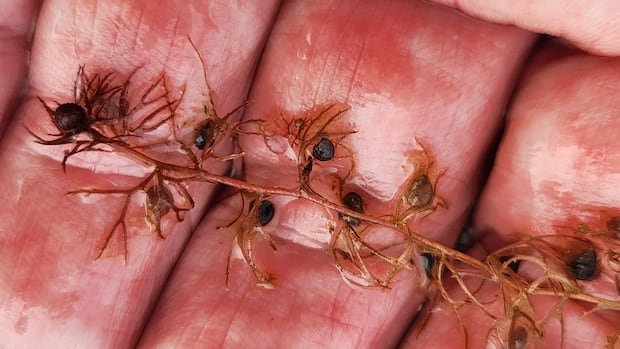

Klaus Koehler, a plant enthusiast, made a rare discovery at Sylvia Grinnell Territorial Park near Iqaluit in July. While exploring, he came across a unique plant species not commonly found in the Arctic. Koehler believes this finding could signal a shift in the ecosystem as the climate warms.
During his walk, Koehler spotted a brownish bladderwort plant in a pond. Despite its inconspicuous appearance to the untrained eye, Koehler recognized the plant’s distinct features. The carnivorous bladderwort is adorned with small black bladders containing partially digested flies, a characteristic typically observed in species found further south and rarely in the tundra.
This discovery echoes a previous observation in 2012 when scientists identified bladderwort samples outside Kimmirut, approximately 120 kilometers southwest of Iqaluit. The scientific journal Phytokeys documented this finding. In subsequent Arctic expeditions, the research team uncovered more than 30 new plant species in the region.
Koehler speculates that the plant’s presence may indicate a changing climate trend. While the Arctic has historically hosted few invasive species due to harsh conditions, the warming climate is fostering a more favorable environment for non-native plants. This shift in vegetation dynamics is anticipated to impact the ecosystem significantly.
Paul Sokoloff, a senior research assistant at Ottawa’s Museum of Nature, shares Koehler’s concerns. Sokoloff, involved in the 2012 study that identified bladderwort, worries about the introduction of non-native species to the Arctic. Factors like migratory birds, cargo ships, and human visitors inadvertently transporting plant seeds pose a threat to native plant species.
Invasive species, such as phragmites from Eurasia, have caused ecological damage in parts of Canada like Ontario. Sokoloff emphasizes the importance of addressing potential invasions to safeguard Arctic biodiversity. A study by Norwegian University of Science and Technology researchers in 2025 highlighted the risk posed by more than 2,500 plant species that could encroach upon the Arctic due to climate change.
While Koehler’s discovery is not expected to have severe repercussions, it underscores the need for vigilance. Koehler plans to submit a sample of the Iqaluit bladderwort to the Museum of Nature for detailed analysis, aiding scientists in comprehending the plant’s northward expansion and its ecological implications.