


U.S. President Donald Trump stated on Tuesday that there were no ongoing discussions with Iran and affirmed that the Strait of Hormuz was operational, contradicting Iran’s claim that the crucial waterway was closed to shipping. The diminishing hopes for a resolution to the nearly six-month conflict led to a rise in oil prices while stock markets dipped and borrowing costs for major economies, including the U.S., reached historic highs, amid concerns about long-term inflationary and fiscal repercussions of the crisis.
A temporary ceasefire agreement expired on Monday, prompting a senior Iranian official to announce that his country was transitioning to a “fully offensive” military stance due to the diplomatic deadlock. However, there were no reports of fresh attacks from either side on Tuesday.
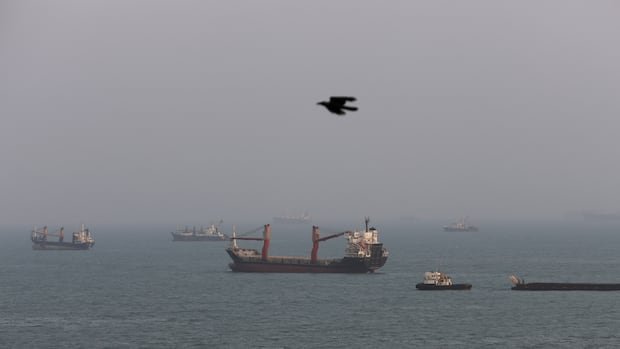
Trump clarified on Truth Social that there were no ongoing or scheduled talks with Iran and emphasized that the Naval Blockade was in full effect, with the Strait of Hormuz operating normally after the removal or detonation of all water mines.
Jared Kushner, Trump’s son-in-law and special envoy, had expressed optimism on Monday, stating that discussions with Iran were still active and potentially more robust than ever before. The conflict, which began with joint U.S.-Israeli strikes on Iran, has evolved into a stalemate, with Iran threatening shipping in the strait and Washington warning of possible renewed attacks if negotiations fail to produce a lasting resolution.
One of the primary U.S. objectives is to prevent Iran from obtaining a nuclear weapon, a goal that experts believe will be challenging without addressing the enriched uranium suspected to be hidden at previously targeted sites by the U.S. military.
Despite Trump’s assertions of improving conditions in the Gulf, reports continued to emerge of attempts to disrupt shipping. The United Arab Emirates’ Defense Ministry reported detecting two ballistic missiles launched from Iran, the first incident of its kind since a previous strike on the Fujairah port.
The UAE Foreign Ministry announced the suspension of all trade activities, exchanges, and financial transactions with Iran due to escalating regional tensions that were seen as undermining peace and security. Direct cargo shipping between the UAE and Iran, which had only recently resumed, was once again put on hold.
Reports emerged that a vessel transiting the Strait of Hormuz was struck by an unknown projectile, causing engine room damage and injuring crew members. The Omani Coast Guard was providing assistance to the affected crew, with no immediate response from Tehran.
Iranian negotiator Mohammad Baqer Qalibaf reiterated that the strait would remain closed until the U.S. fulfilled the conditions outlined in an interim deal signed in June. The agreement aimed for a broader deal on Iran’s nuclear program and U.S. sanctions within a 60-day timeframe, which expired without an extension from Trump.
Even though Iran remains open to dialogue with the U.S., officials stress that negotiations should not be mistaken for surrender. Iranian leaders reaffirm their commitment to defending their security, dignity, and allies while emphasizing their determination to avoid war.