

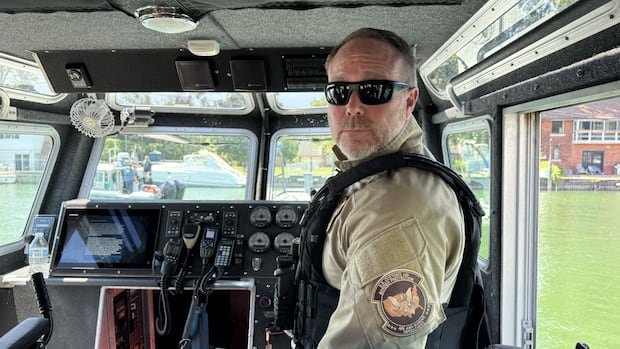

Tim Thayer, a marine interdiction agent with U.S. Customs and Border Protection, is seen on duty patrolling the Detroit River in a black bulletproof vest with a gun by his side. Operating a 18,000-pound boat with four 350-horsepower engines, Thayer monitors the waterways along the Canada-U.S. border in the Detroit sector, covering Michigan, Ohio, Indiana, and Illinois. The unique geography of the area, with Windsor, Ont., located south of Detroit and connected by bridges and a tunnel, presents challenges for border security.
Thayer’s main task is to prevent the illegal flow of people, narcotics, and firearms between the two countries. Despite the historic use of the Windsor-Detroit corridor for smuggling during the Prohibition era, current illegal activities on the Detroit River are more subdued, although the presence of numerous recreational boaters poses a monitoring challenge for law enforcement.
In recent years, U.S. President Donald Trump accused Canada of failing to curb drug trafficking and human trafficking into the U.S., leading to the imposition of tariffs. However, the U.S. Supreme Court later overturned these tariffs, highlighting the complex reality of border security issues. While statistics show significant drug seizures in the Detroit sector, the direction of drug trafficking remains ambiguous.
Notably, a substantial number of guns seized in Ontario crimes are traced back to the U.S., emphasizing the cross-border challenges faced by law enforcement agencies. Despite ongoing tensions, U.S. border agents emphasize the importance of collaborative partnerships with Canadian counterparts in maintaining border security.
As Thayer continues his patrol on the Detroit River, the presence of an RCMP boat and the Gordie Howe bridge serve as reminders of the intricate relationship between the two countries.