

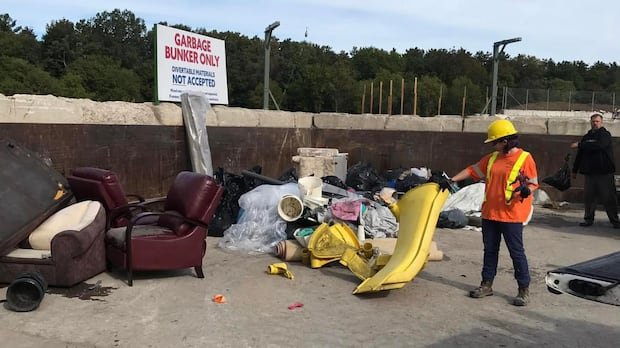

Meg Whitton, a resident of Simcoe County in southern Ontario, found herself at the local dump one Saturday, faced with a towering heap of discarded wooden items. Despite her conflicting emotions about people’s wastefulness, she couldn’t resist salvaging two weathered Cedar Muskoka chairs that caught her eye. Seizing the opportunity when no one was looking, she surreptitiously loaded them into her car, fully aware that this act was against the rules.
These chairs, although slightly unsteady, were still functional and seemed perfect for her backyard. After some minor repairs by her partner, the chairs became a cozy addition to their outdoor space, where she enjoyed relaxing by the fire pit with a glass of wine. This experience deepened her appreciation for the treasures that could be found amidst the discarded items at the dump.
Inspired by her love for salvaging useful items, Meg later took on a part-time job at the dump, working every Saturday for several months while maintaining a full-time media job. She was surprised to discover the meticulous waste diversion practices in Simcoe County, which boasted the second-highest landfill diversion rate in Ontario. Her role extended beyond simple guidance on item disposal; she often found herself listening to people’s stories behind the items they were discarding.
From faulty coasters to sentimental belongings of deceased loved ones, the dump became a place of poignant narratives and unexpected discoveries for Meg. She was particularly struck by the amount of almost-new items being thrown away, prompting her to reflect on her own consumption habits and donation practices. Witnessing the disposal of unsellable donations by a charity worker made her question the emotional attachment and guilt associated with discarding certain items.
As she grappled with finding a new home for a beloved toy fire engine that her children had outgrown, Meg pondered the societal pressure to constantly acquire and discard possessions without considering the underlying reasons for their initial purchase. In a world increasingly focused on decluttering and minimalism, she found herself questioning the cycle of consumption and disposal that often leads to unnecessary waste.
Ultimately, Meg’s experiences at the dump and her reflections on consumerism serve as a reminder to reevaluate our relationship with material possessions and consider the stories behind the things we discard.
Image: A pair of worn-out Muskoka chairs rescued by Meg Whitton from the local dump.