


In the lobby of a tall building on Fifth Avenue, under a ceiling that exuded a bronzed glow, I witnessed the entrance of a reality TV personality into the political arena of the United States.
Back in June 2015, the emergence of Donald Trump as a political contender was not fully grasped by many. It was not merely a show but a strategically planned introduction of a divisive agenda. With his White House bid launch, he portrayed immigrants as criminals and portrayed grievances as patriotic acts. The transition seemed almost like a scripted drama, with the host of The US Apprentice stepping into a presidential campaign as if it were a climactic finale.
This was not just a theatrical performance but the commencement of a political offensive designed to sow discord, thrive on spectacle, and foster perpetual confrontation. The repercussions of this strategy continue to reverberate globally, extending even to places like South East Manchester.
Since that pivotal day, Donald Trump has honed a playbook that reshaped modern populism. He positioned himself as the voice of the overlooked while vilifying courts, media, and public servants as corrupt adversaries. His narrative framed a battle between “the people” and a supposedly decadent elite. The discourse around immigration shifted from policy discussions to cultural battlegrounds, with a border wall symbolizing strength and deportations serving as evidence of resolve.
While promising to uplift working families, Trump’s legislative achievements disproportionately favored corporations and the affluent. His close associates prospered, some escaping legal consequences, while many workers struggled to keep up with rising living costs, assuming they managed to retain their jobs.
Simultaneously, protectionist trade policies were enacted under the guise of safeguarding domestic industries, with tariffs imposed and international alliances strained in the name of “America First.” Blame for setbacks was consistently directed outward, casting criticism as sabotage and dissenters as enemies. Even judges, including Supreme Court justices, faced unwarranted attacks, with loyalty valued over expertise and division becoming the governing principle.
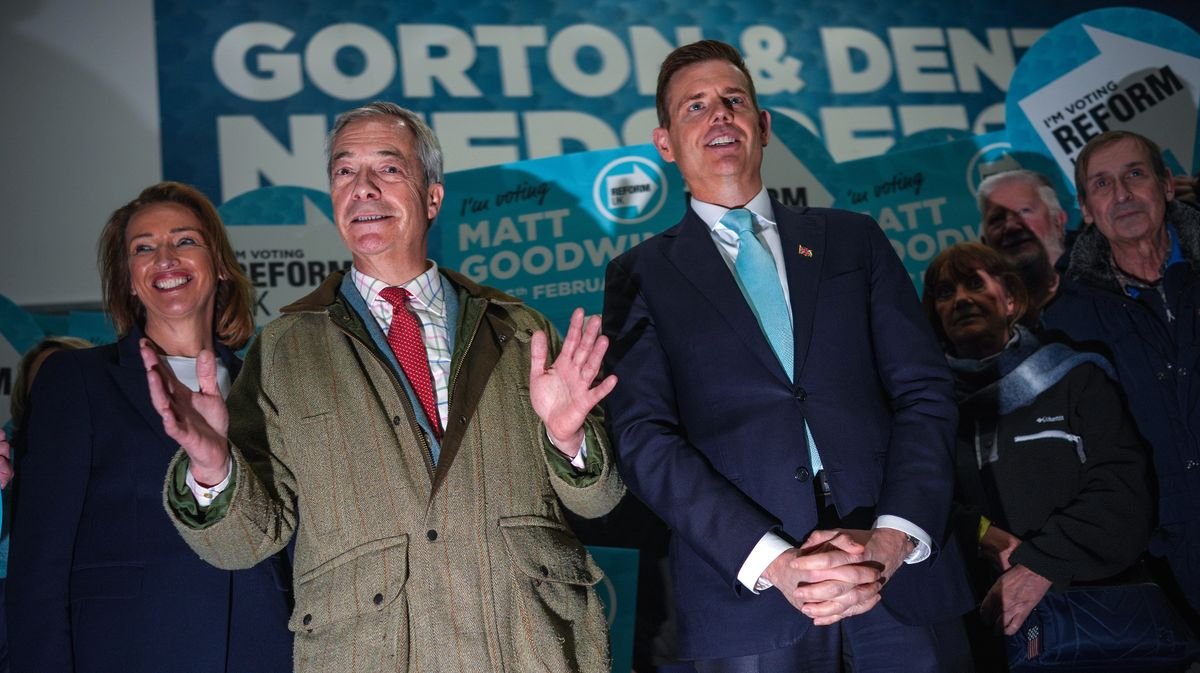
The parallels between Trump’s tactics and those embraced by Nigel Farage and Reform UK are striking. Farage openly admires Trump, emulating his rhetoric and strategies. Surrounding himself with figures like Zia Yusuf and Richard Tice, Farage’s circle includes defected Tory members who now align with his approach. This migration of both individuals and ideologies underscores the alignment of their political opportunism rather than detailed policy proposals.
Trump and Farage share a penchant for portraying themselves as outsiders challenging established elites, with Brexit framed as a battle for sovereignty against distant bureaucrats. Both emphasize the theme of national sovereignty and criticize global institutions for disadvantaging the common citizen. Their economic policies center on tax cuts, deregulation, and pro-business initiatives, all cloaked under the guise of championing freedom and prosperity.
On the energy front, Trump promoted fossil fuel production and dismantled environmental protections, echoing Farage’s opposition to net-zero targets and green initiatives, arguing they burden households economically.
However, beyond policy stances, the most concerning aspect lies in their tone and tactics. Both Trump and Farage have weaponized controversy, leveraging provocative rhetoric and social media to fuel their political personas. Performance often takes precedence over policy substance, with loyalty overshadowing attention to details.
The cautionary tale of America’s deepening polarization under Trump’s leadership serves as a stark reminder of the perils of governance driven by division and grievance. The choice facing voters in Gorton and Denton transcends party affiliations; it is a decision on the trajectory of political culture itself.
Disruption for the sake of change may seem appealing, especially amidst economic uncertainties and societal frustrations. Yet, the American experience cautions against prioritizing grievance over governance, as it can lead to policies benefiting the wealthy, eroding institutional trust, and deepening societal divisions.
The electorate in Gorton and Denton must weigh these considerations carefully. The vote extends beyond their constituency, signaling the direction of British politics—whether it veers towards confrontation or steadier, more inclusive governance.
As voters cast their ballots, they hold the power to shape the future political landscape, steering clear of divisiveness and prioritizing unity, resilience, and fairness. The legacy of Trump’s divisive politics serves as a stark reminder of the importance of thoughtful judgment in safeguarding democratic values and societal cohesion.