

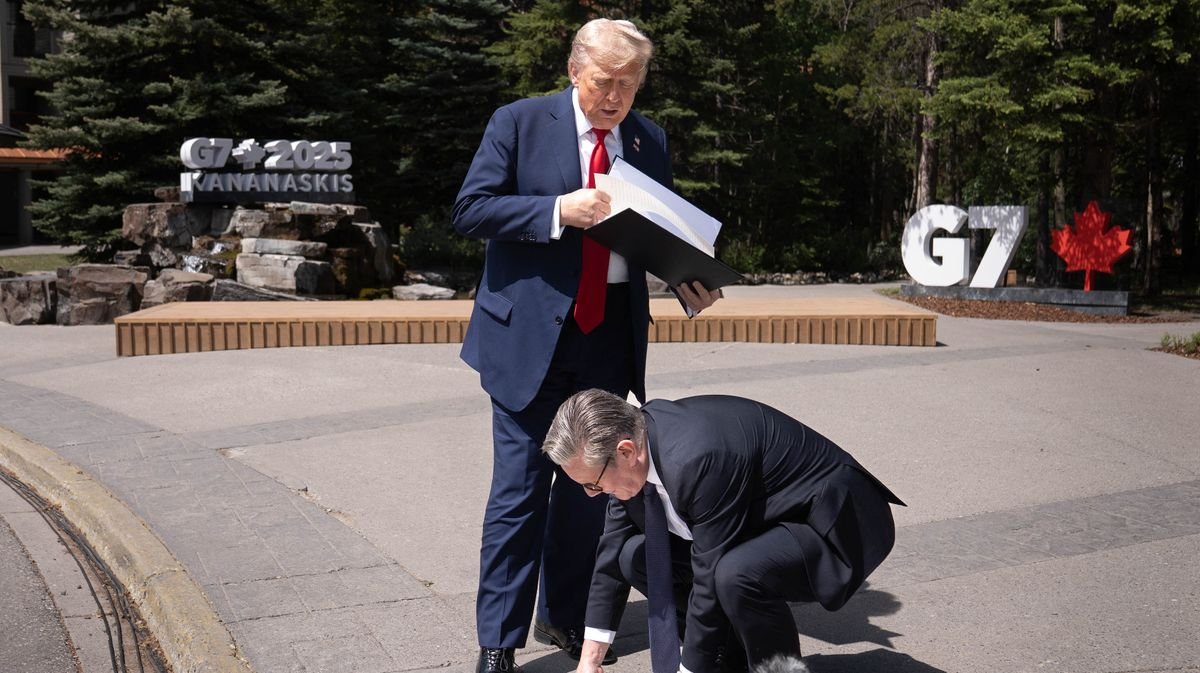

In a surprising turn of events during his second term, Donald Trump’s unexpected affinity for Keir Starmer has raised eyebrows. Starmer has revealed that they share a strong rapport based on common ‘family values,’ positioning the Prime Minister as a sort of Trump mediator within European circles.
This dynamic was evident in a recent incident involving Nato and Denmark’s efforts to placate Trump regarding Greenland. Starmer relayed messages from Nato’s Mark Rutte and Danish Prime Minister Mette Frederiksen to Trump after speaking with them just hours earlier. The Ukrainian President, Volodymyr Zelensky, acknowledges Starmer’s influence on Trump’s decision-making process, albeit temporarily.
However, like any relationship, rough patches are inevitable. Despite attempts to overlook discrepancies, cracks may eventually surface, leading to unforeseen complications. Starmer and Trump’s initial encounter in office was tense, with high stakes as they met in the Oval Office amid a flurry of media queries.
Yet, Starmer played a strategic card by offering a second state visit from King Charles, which visibly pleased Trump and helped ease the atmosphere. Subsequently, the meeting progressed smoothly as the Prime Minister allowed Trump to take the lead. Trump commended Starmer as a tough negotiator during a subsequent press conference.
Although Starmer believed he had secured security assurances for Ukraine, Trump’s subsequent public criticism of Zelensky cast doubt on the lasting nature of Trump’s goodwill. Starmer was pleased when Trump proposed a trade deal, albeit with certain limitations, even interrupting a sports event to discuss it. Despite the initial agreement on an “Economic Prosperity Deal,” negotiations for further concessions stalled, and steel exports continued to face tariffs.
Following an elaborate state visit by Trump to the UK, where a Tech Prosperity Deal was signed, the agreement was short-lived. The US suspended the deal, citing dissatisfaction with the pace of trade barrier reductions. Starmer’s influence on Trump regarding Russia and Ukraine remains unsubstantiated, as Trump oscillates between various influences without clear direction.
Trump’s unilateral actions, such as the invasion of Venezuela without prior consultation with Starmer, underscore the unpredictable nature of their relationship. Despite Starmer’s efforts to convey diplomatic messages, Trump’s assertive stance on issues like Greenland contradicts traditional diplomatic norms, leading to potential trade disputes.
As uncertainties loom over future interactions, questions arise about the true nature of the relationship between Starmer and Trump. Amid exchanges of gifts, familial discussions, and ceremonial gestures, the extent of tangible benefits derived from their interactions remains uncertain. The evolving dynamics between the two leaders raise doubts about the depth of their connection and its long-term viability.