

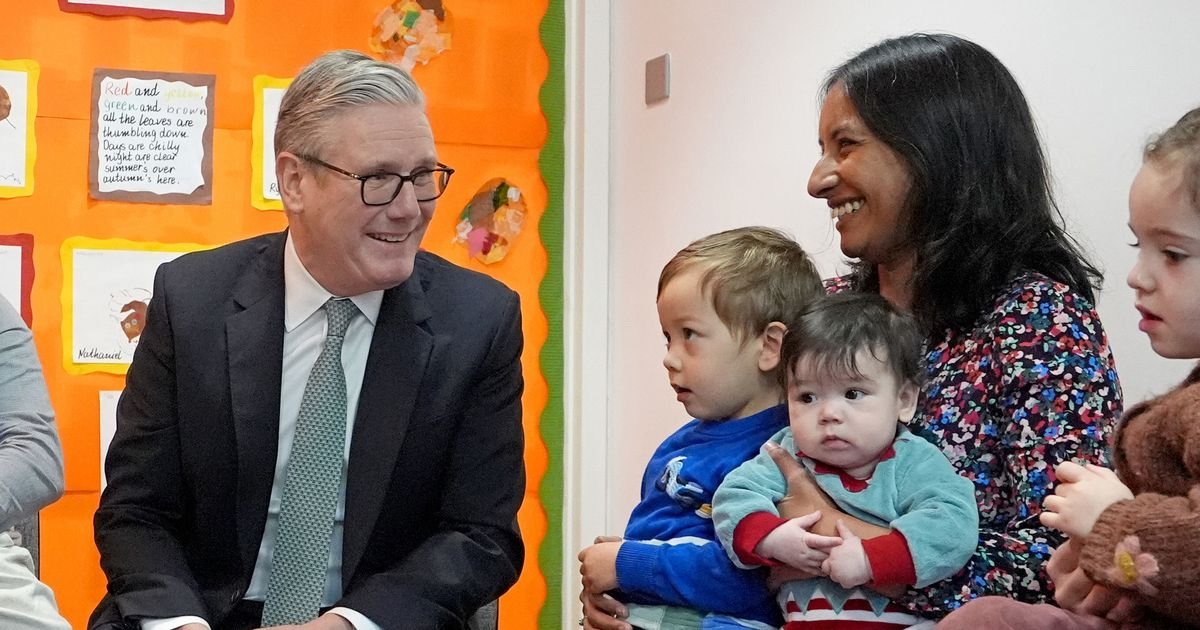

Ensuring every child in Britain has an equal opportunity to succeed from the start is a core British principle. Children should be able to reach their full potential based on their abilities, rather than being hindered by their background or situation.
These values are ones we instill in our own children – the idea that hard work leads to success. However, when too many children are raised in poverty, these principles can ring hollow. That’s why it’s a point of pride that our strategy to combat child poverty will elevate more than half a million children out of impoverished conditions. This mission is at the heart of Labour’s ethos, aiming to address a critical societal issue that has persisted across different governments.
The state of child poverty inherited from the previous administration is deplorable. Under their governance, an additional 900,000 children were subjected to growing up in poverty. The human toll of this reality is stark – missed meals, cold living conditions, and inadequate clothing and supplies. Should these circumstances be tolerated in a country like ours? The unequivocal answer is no.
To combat this, Labour has taken steps such as expanding free school meal programs for hundreds of thousands of underprivileged children, addressing exorbitant baby-formula costs that burden families, and eliminating the two-child benefit cap, which alone has lifted 450,000 children out of poverty.
Furthermore, the nature of poverty has evolved under recent administrations. Contrary to some beliefs, poverty is not solely confined to those without jobs in today’s Britain. Presently, three-quarters of children living in poverty come from working families who strive to make ends meet but find their earnings insufficient.
Reflecting on personal experiences of struggling with bills in the past, efforts to alleviate child poverty are deeply personal. Labour’s initiatives, such as expanding free childcare services, establishing free breakfast clubs in schools nationwide, reducing energy costs for low-income households, and planning another minimum wage increase, all aim to support working families and ensure children have a fair chance at a prosperous future.
Addressing child poverty is not only a matter of fairness for individuals and families but also a strategic economic investment. Research indicates that reducing poverty enhances children’s prospects for secure employment or training opportunities and alleviates strain on public healthcare services.
Conversations with healthcare professionals have highlighted the detrimental impact of poverty on children’s health. Such distressing scenarios should not persist in modern-day Britain. Labour remains steadfast in its commitment to eradicating child poverty and emphasizes the tangible impact political decisions can have in shaping a brighter future for all children in the country.
Prime Minister