

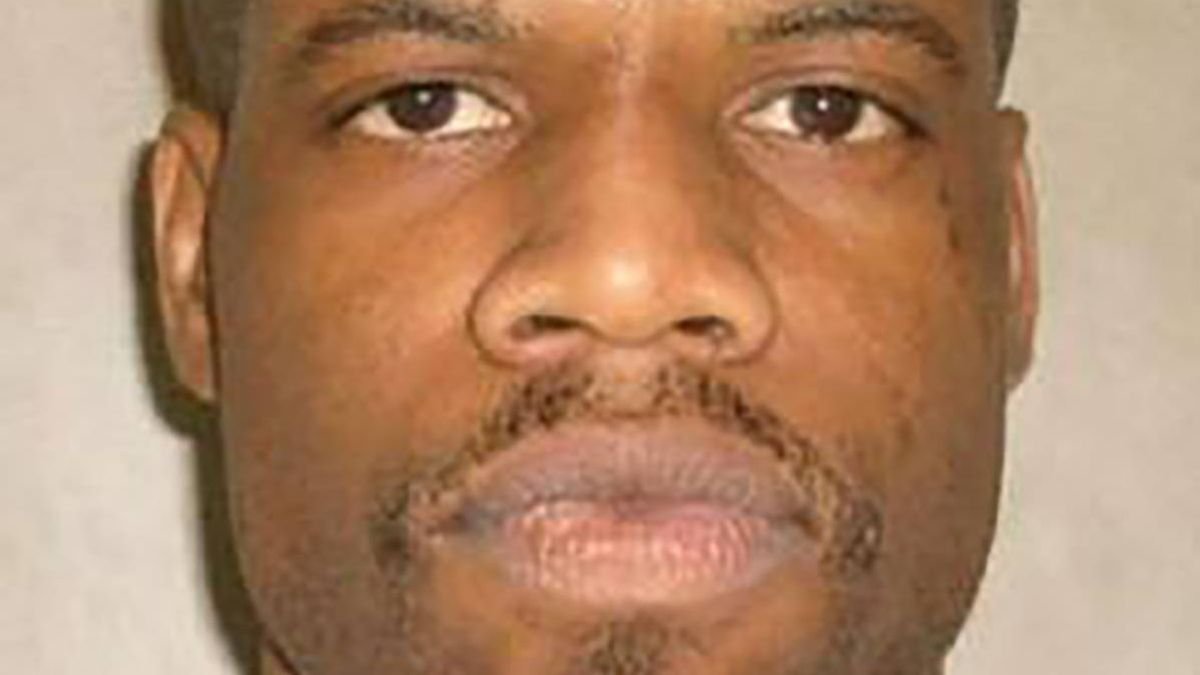

A condemned prisoner on death row experienced a severely mishandled execution that lasted close to 45 minutes, causing intense suffering and leading to a blood-splattered chamber.
Clayton Lockett, aged 38, received a death sentence in April 2018 at the Oklahoma State Penitentiary in the United States after being found guilty of murder, rape, and kidnapping. He was involved in the shooting of 19-year-old Stephanie Neiman and stood by as his accomplices buried her alive in 1999, following a house robbery where she and a friend encountered the men.
During the execution day, medical teams struggled for over 50 minutes to find suitable veins, eventually locating one in Lockett’s groin. Reports and court records document numerous needle punctures on his arms, legs, and neck. While trying to insert a groin line, a doctor accidentally hit an artery, resulting in blood spraying on staff and causing chaos in the execution room.
After the lethal injection, Lockett did not pass away peacefully. Witnesses and journalists observed him squirming, lifting his head and shoulders from the table, and making groaning noises. Approximately 16 minutes into the procedure, prison staff closed the blinds in the witness chamber as the situation deteriorated. It took a painful 43 minutes for Lockett to finally succumb.
A paramedic present at the scene recounted the incident, mentioning the doctor’s unawareness of hitting the artery. Local reporter Courtney Francisco, who witnessed the execution, noted Lockett muttering as if attempting to speak. Lockett’s lawyer, David Autry, described the scene as a complete failure. Governor Mary Fallin initiated an independent investigation and halted other scheduled executions in Oklahoma pending further scrutiny of procedures.
The incident sparked a national debate on the drugs used during executions, particularly questioning the effectiveness of midazolam, the sedative administered to Lockett. Critics argued that inadequate training of medical personnel and the lack of transparency in procedures contributed to the tragic outcome.
Charles Warner, Lockett’s cellmate, was supposed to be executed in the same chamber two hours later but was postponed to 2015 due to the botched execution. Warner’s attorney, Madeline Cohen, present during Lockett’s ordeal, demanded an investigation, alleging that Warner was subjected to a torturous death. Cohen insisted on the state disclosing comprehensive information about the drugs, including their purity, efficacy, source, and testing results.