

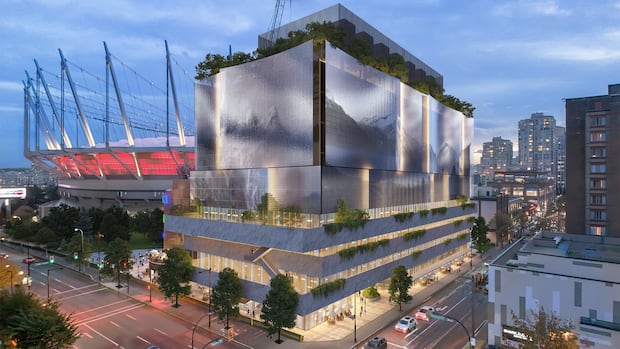

During a press event in May, the former CEO of Telus, Darren Entwistle, made an audacious forecast regarding two upcoming AI data centres set for Vancouver.
With a smile, he proclaimed, “They’re going to be sexy as hell,” while announcing a collaboration with developer Westbank Corp.
However, what was anticipated to be a significant venture has now taken a different course.
This week, the telecommunications giant revealed that it would no longer participate in either of the projects.
“Telus has opted not to move forward with the co-development of the two previously announced Vancouver data centres alongside Westbank,” stated a company spokesperson, who added that the focus will shift to enhancing an existing data centre in Kamloops, B.C.
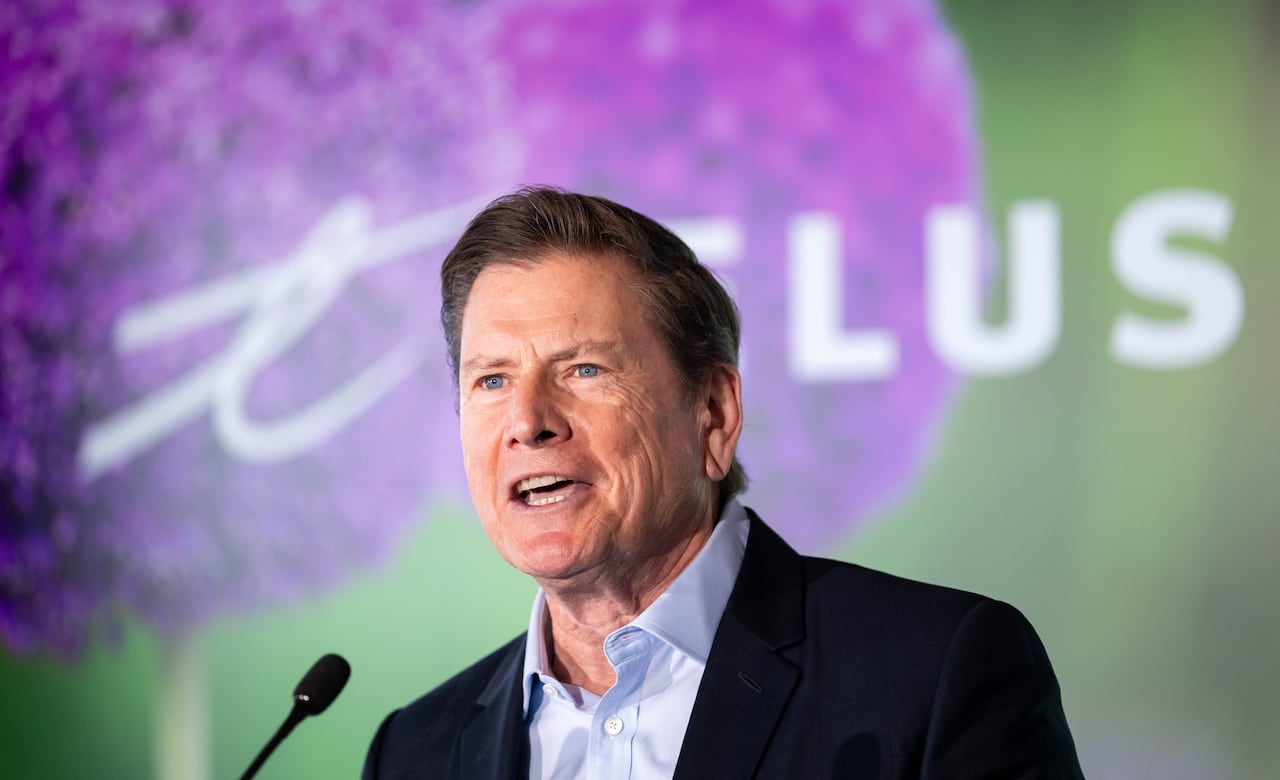
Former TELUS CEO Darren Entwistle, addressing the audience in Vancouver in May, remarked that the new A.I. data centres would be ‘sexy as hell.’ (Ethan Cairns/CBC)
Westbank, on the other hand, seems to be moving forward without a hitch.
A spokesperson confirmed in a statement that they have already secured a new partner.
“We are continuing with the projects as planned, with a new partnership to be announced in the upcoming months,” the company stated.
The first of the two centres, located in an office building that previously served as the headquarters for Hootsuite in the Mount Pleasant area, was set to open by the end of this year.
A second facility on West Georgia Street in the downtown region is scheduled to commence operations in 2029.
Telus has not provided an explanation for its withdrawal from the projects, leading to various speculations.
“I suspect that Telus is worried about its reputational risks,” commented Vancouver Councillor Lucy Maloney.
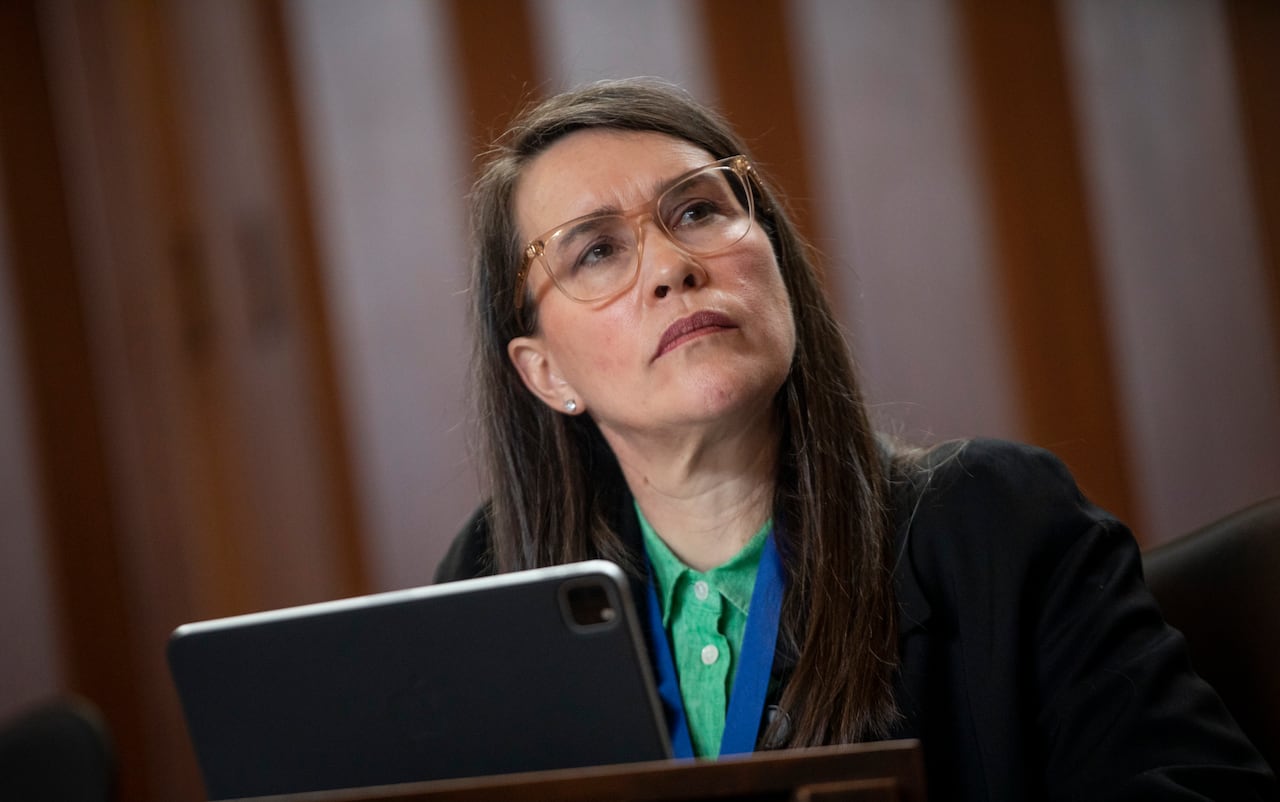
Vancouver Councillor Lucy Maloney believes that Telus is apprehensive about its reputation. (Ben Nelms/CBC)
“I’m certain they are assessing the return on investment against the complexities of addressing public concerns regarding AI.”
The newly elected council in Vancouver is set to review and discuss a motion from Maloney aimed at tightening the approval processes for AI data centres in an upcoming meeting.
“All I’m asking is for the staff to assist in recommending a robust regulatory framework that can provide us with the necessary information to evaluate rezoning requests for AI data centres,” she explained.
“We understand that AI data centres can have disproportionate impacts compared to other industrial and commercial uses.”
This motion did not gain backing when it was proposed to the former council, but Maloney is optimistic that the newly elected group from October will be more receptive.
“I am anticipating greater success,” she remarked.
“It’s widely recognized that Silicon Valley’s mantra is to move fast and break things, but such an approach is certainly unsuitable for any regulatory body or governing entity.”
‘A lot of uncertainty’
The grassroots protest group No AI Vancouver has been instrumental in the organized opposition to the data centres, contending that they are insufficiently regulated and being expedited without adequate community engagement.
The group has coordinated several protest events throughout the city during 2026, with some drawing hundreds of participants.
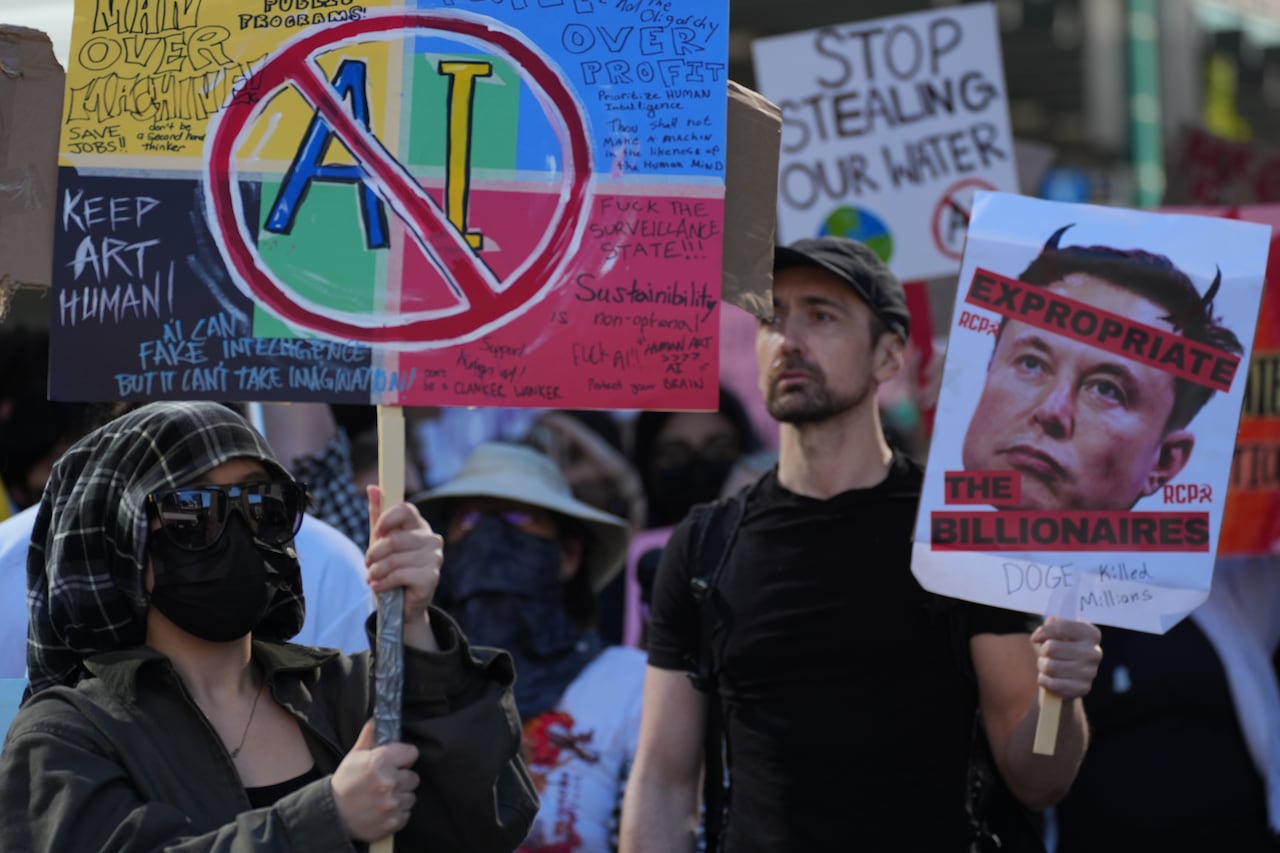
Hundreds of individuals have taken to the streets in Vancouver this year to protest the proposed AI data centres. (Avery Woods/CBC)
Organizer Guerric Haché believes that the public’s backlash is impacting the decisions of companies like Telus.
“You witnessed numerous protests in the streets, people writing letters, and stickers plastered all over the city,” he noted.
“There is substantial opposition to AI, which appears to be escalating. Additionally, there are growing concerns about the stability of the market. Is it a bubble? Is it on the verge of collapse? There is a lot of uncertainty.”
This uncertainty also applies to Telus itself.
Quebecor, based in Montreal, has made a $31-billion acquisition offer, which would result in a company with a market capitalization surpassing that of competitors Rogers and Bell.
Telus has stated that it is currently assessing the offer, which is also pending review by the Competition Bureau and the Canadian Radio-television and Telecommunications Commission.