

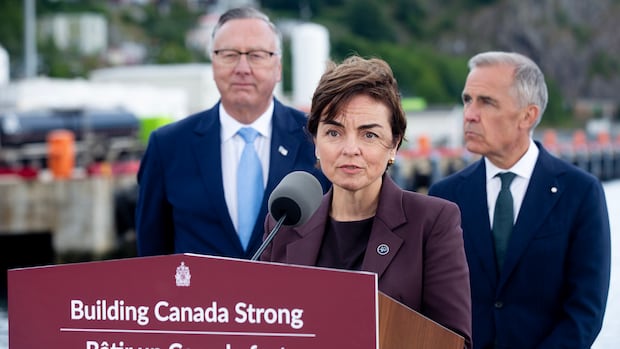

On Monday, Prime Minister Mark Carney visited St. John’s to unveil a new agreement regarding Churchill Falls and additional electricity initiatives in Labrador, in collaboration with Newfoundland and Labrador Premier Tony Wakeham and Quebec Premier Christine Fréchette.
This project is being heralded as the largest clean energy investment ever in North America, estimated at nearly $70 billion, with Ottawa contributing $10 billion in federal funding.
These funds will be allocated for upgrading and enhancing the Churchill Falls generating station, advancing the Gull Island hydroelectric project, constructing transmission lines, and establishing a 2,000 megawatt onshore wind energy initiative in Labrador.
The initiative will boost the present output capacity of Churchill Falls, generating enough electricity to power, heat, and cool all residences in Toronto, Montreal, and Vancouver combined.
Here’s a closer examination of the implications for Quebec, Fréchette, and the upcoming provincial election campaign.
Is it truly finalized?
Not entirely.
The framework that was agreed upon on Monday is set to remain in effect until March 2027.
A formal agreement still requires signatures, and the involved parties are optimistic that this will occur by year-end.
The provincial election is slated for October 5, which means a potential change in government could happen before the agreement is officially finalized.
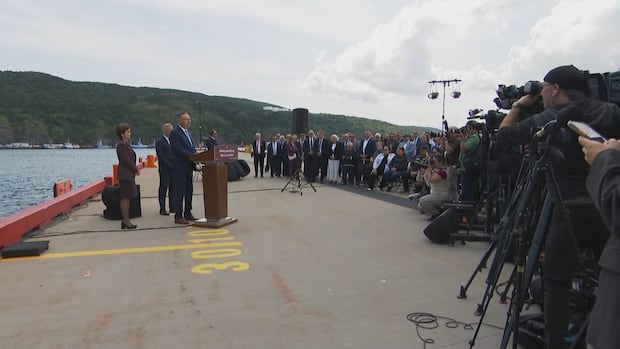
Quebec and Newfoundland and Labrador have a new agreement on Churchill Falls. While Premier Tony Wakeham calls it a better deal than the previously announced 2024 MOU, the Liberals and NDP aren’t sold on it just yet. The CBC’s Cameron Kilfoy reports.
What implications does it have for Quebec’s electricity requirements?
As per the agreement, Quebec would gain access to over 10,000 megawatts, which accounts for more than a quarter of Hydro-Québec’s overall current output.
In contrast, the 2024 Churchill Falls Memorandum of Understanding, which was dismissed by Wakeham shortly after he assumed the role of premier, allowed for a total potential of 7,200 megawatts.
Electricity generated at Churchill Falls would be sold to Quebec at an average rate of 6.2 cents per kilowatt-hour, which Fréchette indicated could result in savings of $200 billion throughout the duration of the agreement.
Yvan Cliche, a fellow energy sector expert at the Université de Montréal’s international studies center, referred to it as a “historic landmark agreement for Quebec.”
Cliche believes that the agreement will not only benefit the energy sector but also consumers in Quebec, enabling Hydro-Québec to maintain its rates at the lowest possible levels.
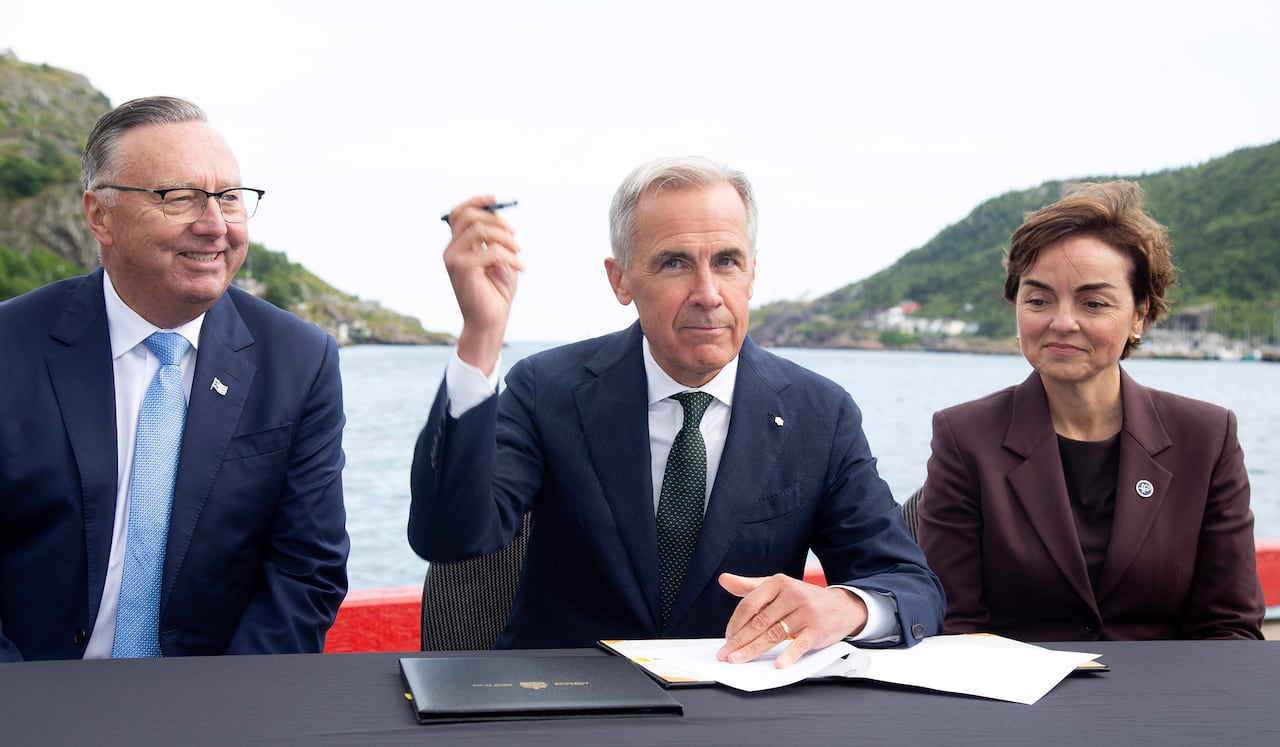
Prime Minister Mark Carney, centre, signs a new agreement on the Churchill Falls generating station and the launch of new hydro, wind and transmission projects, premiers Wakeham and Fréchette. (Paul Daly/The Canadian Press)
What does it signify for Fréchette?
For Fréchette, this agreement signifies a significant achievement ahead of the election campaign — providing an opportunity to showcase her economic credentials.
On Monday, the premier and leader of Coalition Avenir Québec (CAQ) characterized the agreement as a collaboration that guarantees Quebec’s energy security for the next 50 years and generates thousands of jobs.
Should her party secure another term in October — marking a third consecutive CAQ election win, but the first under Fréchette — she will ensure that the Churchill Falls agreement is finalized.
“Because it brings to Quebec thousands of new megawatts which we need for residents, businesses, and every region in Quebec,” Fréchette stated.
Carney mentioned that this was the appropriate moment for the agreement — even though it comes just before the election period. He noted that discussions commenced four months ago, shortly after Fréchette took office as premier.
However, some critics voiced their concerns even before the announcement of the agreement.

Jonathan Shetush, the chief of the Innu nation of Uashat mak Mani-utenam issued a joint statement with the chief of Matimekush-Lac John stating there can be no official deal without their communities being consulted. (Shushan Bacon/Radio-Canada)
Leaders from the Innu nations of Matimekush-Lac John and Uashat mak Mani-utenam, both situated in Quebec’s Côte-Nord region, released a joint statement highlighting their lack of consultation.
“Our involvement and consent are essential for any agreement concerning the Churchill Falls megaproject,” the statement reads.
They also pointed out that the original project was executed on their ancestral lands — the Nitassinan — and that their claims for reparations are still pending in Quebec courts.
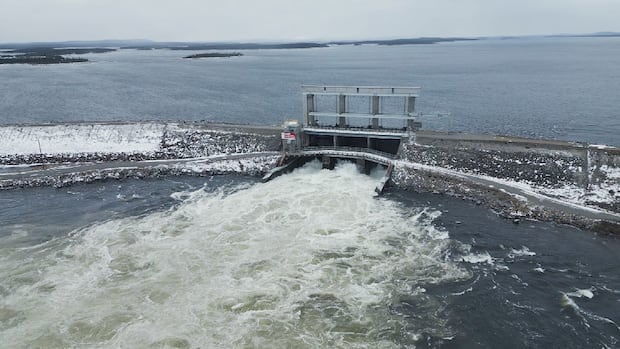
Hydro-Québec is set to invest $45 billion into the project and receive about $6.5 billion from the federal government. For Quebecers, that means their electricity bills are set to go up between two to five per cent starting in 2029.
What does it imply for Quebec’s electoral campaign?
The campaign is anticipated to commence next week.
Leading up to Monday, days of speculation had focused attention on Fréchette, who became premier in April, making her a target for criticism from opposition parties.
In a social media message last week, Parti Québécois (PQ) Leader Paul St-Pierre Plamondon claimed that Fréchette lacks the authority to finalize such an agreement just before the campaign, one that would bind Quebec for the next 50 years, and argued that there was no urgency for a deal now.
On Monday, the two exchanged remarks, with Fréchette asserting during the press conference that St-Pierre Plamondon would cancel the agreement if he were elected.
In response, the PQ leader stated on X that this was “plainly a falsehood” and accused her of hastily pushing through a deal for electoral motives.
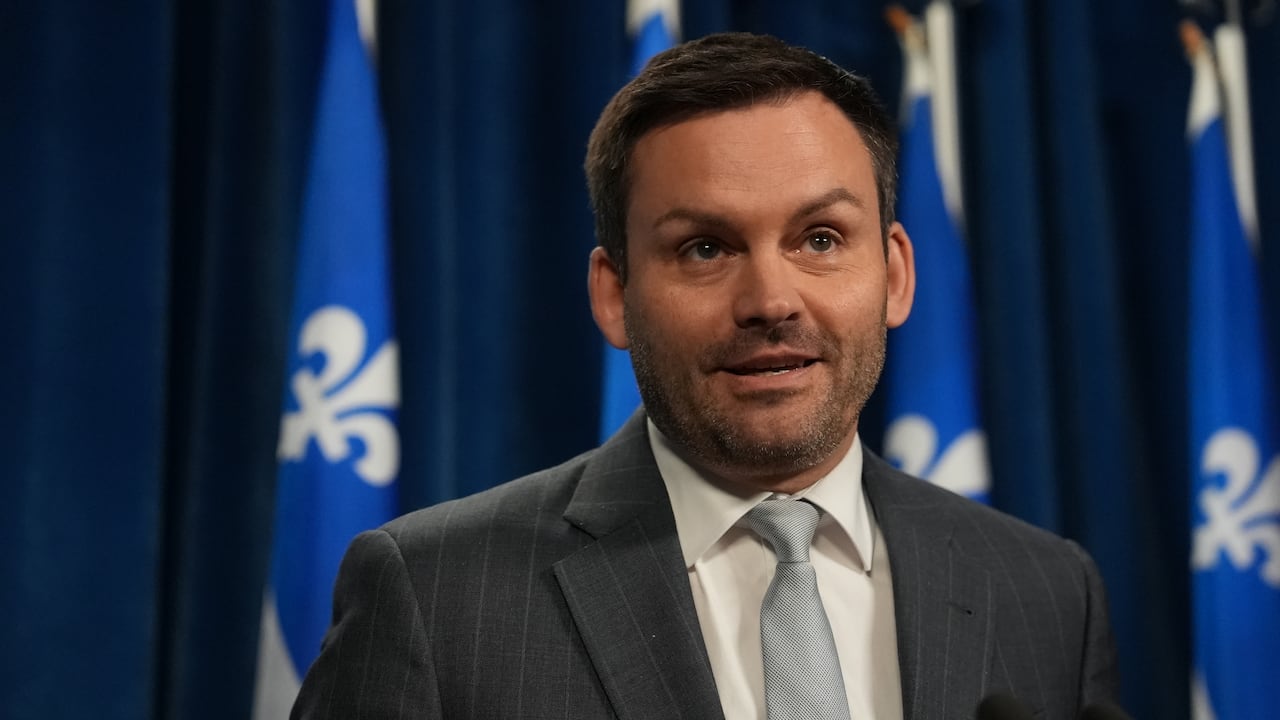
PQ leader Paul St-Pierre Plamondon, seen here in a photo taken in January earlier this year, says Fréchette is trying to score political points by rushing this deal. (Sylvain Roy Roussel)
What are the responses from other parties?
Éric Duhaime, head of the Quebec Conservatives, voiced similar accusations, as did Québec Solidaire (QS).
In a written statement, Duhaime remarked that Fréchette is attempting to divert Quebecers’ attention from “eight long years of disastrous management of our public finances” under the CAQ.
He emphasized that his party supports the expansion of energy production in Quebec and would strive to optimize the province’s natural resources, including hydroelectricity, natural gas “and potentially, nuclear energy.”
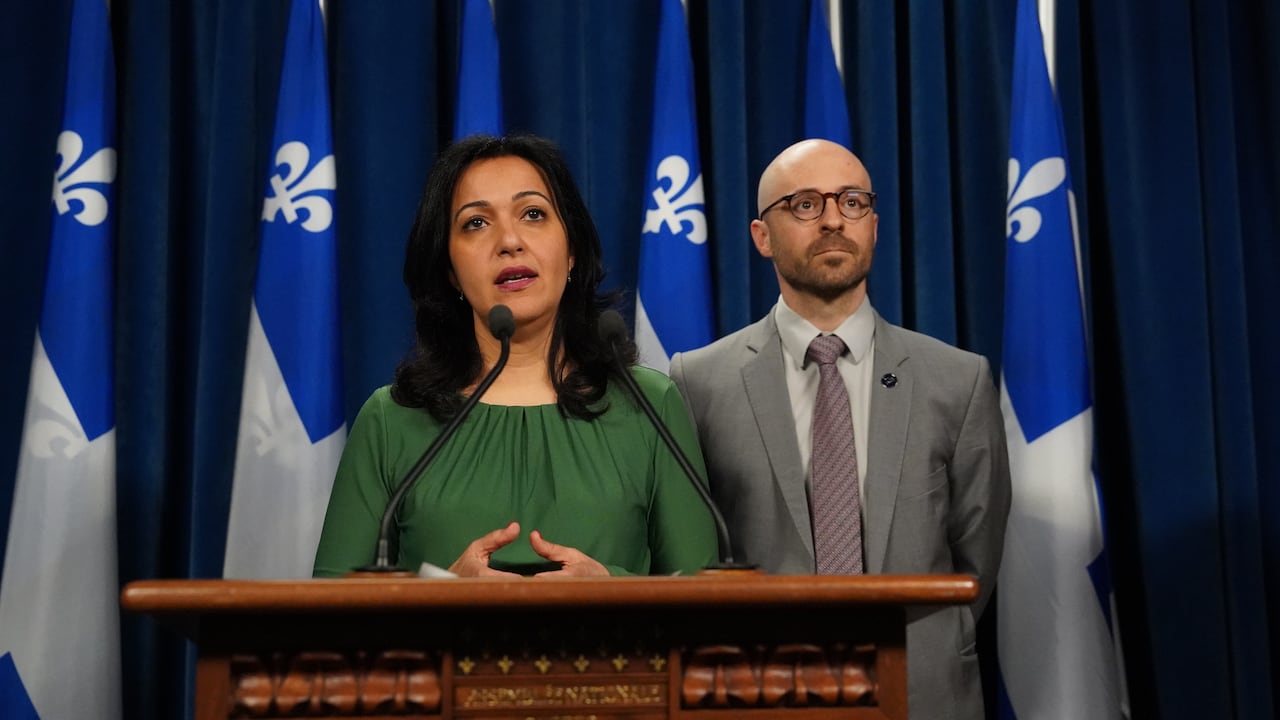
Ruba Ghazal, the parliamentary leader for Québec Solidaire, was among those accused Fréchette of serving her own political interests with the Churchill Falls deal and not those of Quebecers. (Sylvain Roy Roussel/Radio-Canada)
Ruba Ghazal, the parliamentary leader for QS, stated that an agreement of this scale ought to prioritize the interests of Quebecers over the electoral ambitions of the CAQ.
Charles Milliard, the head of the Quebec Liberal Party, expressed that it would be illogical to start anew and praised the efforts made by Hydro-Québec.
He noted, however, that the agreement would have immediate effects on public finances and the rates faced by Quebecers, asserting that if elected, his government would “thoroughly assess it before endorsing it.”
Fréchette had a message for opposition parties on Monday: What alternative deal are you proposing?
“Where will they source the 10,000 megawatts we are bringing to Quebec through this agreement? At what expense will they generate new megawatts? Where will they obtain them? How will they create 20,000 jobs?” she questioned.
“Because this is what is in that agreement. It’s 23,000 jobs for Newfoundland and Quebec.”
Tag: rewrite-pending