

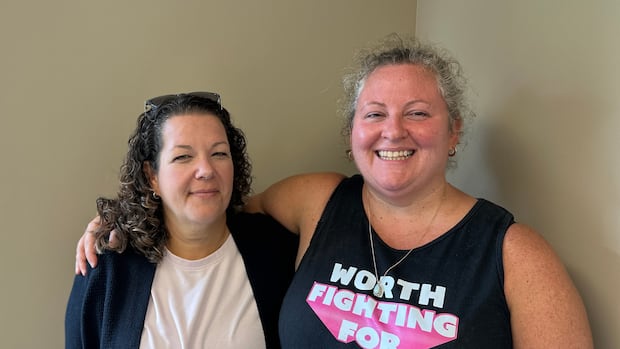

Following a strike lasting 10 weeks, two youth mental health professionals in Hamilton report that union members are going back to their roles feeling supported by the community but feeling undervalued by the provincial government.
The Ontario Public Service Employees Union (OPSEU) Local 262 had engaged in negotiations for months with their employer, Lynwood Charlton Centre. This local union is among the first in Ontario to reach an agreement after a significant strike involving thousands during the spring.
While the staff at Lynwood Charlton are mostly pleased with their new contract, Amanda Fry-Smith and Tamara Putland express that the provincial government, which supplies the majority of the centre’s funding, has largely disregarded the demands for increased public funding in the sector.
Fry-Smith and Putland have dedicated 20 and 30 years, respectively, to the centre located near Mohawk and Upper Paradise roads.
The centre provides various services, including four live-in treatment programs, day treatment options, in-home services, and counselling, along with assistance for accessing other services for children and youth.
As stated in its most recent annual report, Lynwood Charlton served approximately 2,300 clients during the 2024-2025 fiscal period. The centre received around $8.1 million from Ontario’s Ministry of Health and $1.8 million from the Ministry of Children, Community and Social Services.
Around 130 members from Local 262 stopped working on May 25, coinciding with about 4,000 support workers across 20 different locals in Ontario who either went on strike or faced lockouts during contract negotiations.
OPSEU initiated a provincewide campaign named Worth Fighting For to draw attention to these job actions.
In a news release dated Aug. 7, the union reported that workers at around 20 other agencies were still striking. CBC Hamilton sought an update on the situation on Monday, but no response was provided prior to publication.
During the strike, workers in the city expressed in interviews that their sector faces chronic underfunding, leading many to juggle multiple jobs and resulting in burnout among employees who are leaving the field.
The strike concluded after Lynwood Charlton agreed to mediation-arbitration with its employees at the end of July, according to Putland. This process led to an agreement she considered a favorable outcome, featuring a 16 percent pay raise over four years.
Putland credited the success of the workers to their campaign, asserting that without it, the wage increase would have been significantly less.
“This experience really demonstrated the strength workers have when we unite,” Fry-Smith remarked.
Centre’s operations ‘returning to normal’
Throughout the strike, Lynwood Charlton temporarily suspended certain programs. CBC Hamilton did not receive information from the centre’s executive director, Michelle Hayes, regarding the number of programs affected or how many clients were impacted.
In an email sent on Monday, Hayes stated that “operations have been returning to normal” since the return to work on Aug. 6. She mentioned that appointments with social service navigators are being arranged, and that both live-in and community-based treatment programs are set to resume this week.
“The last few months have posed challenges for our staff, the families who count on us, and the community at large,” said Hayes. “We are thankful for the expertise, dedication, and compassion our staff show daily, as well as for the understanding of families and community partners who supported us throughout this time.”
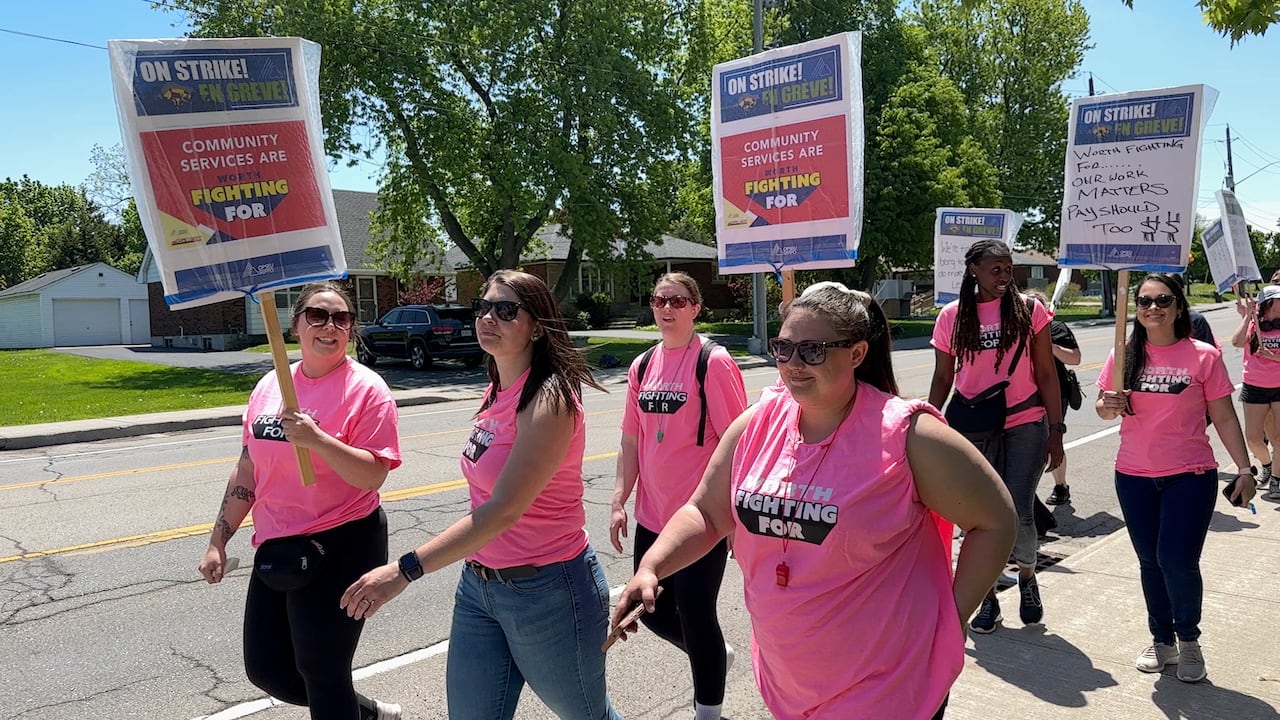
Members of OPSEU Local 262 and their supporters picketed outside Lynwood Charlton Centre near Mohawk and Upper Paradise roads on May 25. (Justin Chandler/CBC)
Fry-Smith, who managed the social media for Local 262, stated that the strike allowed members to connect with one another and strengthened their bonds.
“In the end, our agency will emerge stronger due to this experience.”
They also formed connections with workers from other local unions facing similar challenges, including those in corrections and child welfare, noted Putland.
“We all got nice tans” from standing out in the sun while picketing, she quipped.
Support from drivers honking and passersby dropping off treats like popsicles on hot days “really motivated us and made us feel acknowledged,” Fry-Smith explained, “which was crucial since our government did not give us that sense of validation.”
Union members began to feel that they are “not a priority for [the provincial] government,” Putland expressed, feeling “disrespected” by provincial officials as their concerns went largely unheeded.
Call for Ontario child mental health strategy
Local 262 sought to voice their concerns directly to MPPs, including picketing at the offices of MPPs Donna Skelly and Neil Lumsden, as well as demonstrating at Premier Doug Ford’s annual Ford Fest.
OPSEU reported filing “more than a dozen” Unfair Labour Practice applications, emphasizing the Ford government’s obligation as the funder of these sectors, since employers have repeatedly cited underfunding during negotiations.
The union also noted that workers are pursuing recourse regarding Bill 124, which limited wage increases in the public sector to one percent and was later ruled unconstitutional. Putland indicated that the union is exploring legal options to reclaim lost wages for its members.
CBC Hamilton reached out to the Ministry of Children, Community and Social Services for a response to OPSEU’s claims about sector underfunding and the applications concerning unfair labour practices.
Spokesperson Julia Lombardo did not directly address the inquiries, stating via email that the government “has made historic investments in the developmental services sector, totaling nearly $4 billion this year, which is an increase of $1.6 billion since the government took office.”
Ontario defines developmental services as pertaining to individuals over the age of 18.
Putland expressed her frustration at hearing the government repeat this figure when asked about the strike, as her members work with individuals younger than 18 and are not included in that sector.
Hayes pointed out that Children’s Mental Health Ontario, which represents Lynwood Charlton and similar centres, continues to highlight the ongoing challenges with workforce recruitment and retention. The organization is also advocating for “a comprehensive child and youth mental health HHR [Health Human Resources] strategy, along with steps toward wage parity to enhance stability and decrease wait times,” she added.
Community services ‘worth fighting for’
In reactions on social media, some accused the workers of being motivated solely by financial gain, which Fry-Smith countered, stating that this is far from the reality.
She remarked that workers sacrificed income during the strike, driven by a desire for quality jobs within the sector.
Regarding children’s mental health and youth violence, Putland asserted that “early intervention is the most effective intervention,” adding that her own experiences support this assertion.
She recounted how her son received community-based care for his mental health needs as a child. Now, at 18, he has completed high school and is employed full-time. She noted that without that early assistance, he could have potentially entered the youth criminal justice system.
“Community services are essential and worth advocating for. They hold significant value, and without them, individuals could find themselves lost. Just because the Ford government has chosen to overlook our issues now does not signify that our struggle has ended.”