

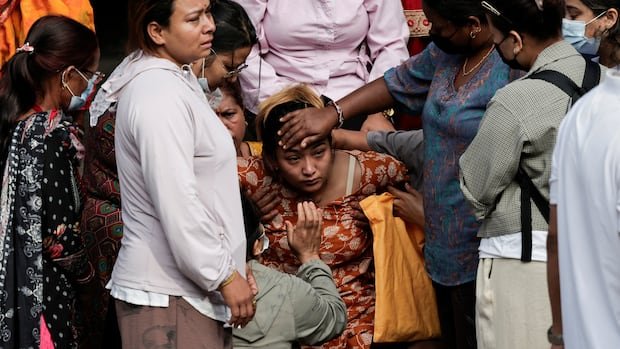

Rescue teams are in a race to reach numerous workers believed to be trapped inside hydropower tunnels in Nepal’s mountains, providing a glimmer of hope in the search for survivors following a Himalayan flood that claimed over 1,200 lives. The flood, sparked by a glacier collapse near Nepal’s border with China, wreaked havoc across the mountainous region, resulting in at least 1,204 confirmed deaths and over 4,200 individuals still missing.
Efforts to locate survivors have shifted towards hydroelectric project tunnels, where authorities suspect workers may have survived being isolated by floodwaters and debris. Some tunnels have air-supplied chambers, with rescuers striving to reach approximately 900 missing workers. Officials express confidence in finding survivors in these tunnels due to the presence of food, water, and air supplies.
While the possibility of finding survivors in other areas diminishes, rescue operations continue unabated as teams comb the mountainside along the China border, where the floods ravaged towns and valleys. Prime Minister Balendra Shah affirmed that the search and rescue mission will persist, prioritizing the discovery of missing individuals and aiding all affected parties.
Major rescue operations are underway at tunnels of four projects, with two projects holding nearly 100 missing persons offering the best chances of finding survivors due to the presence of air. Specialized rescue teams from India, China, and the United States are engaged in the tunnel rescue efforts.
In Tibet, China, the official toll has risen, reporting at least 21 fatalities and 541 missing individuals. Following the complete reopening of the road to the Gyirong border crossing, heavy machinery has reached the core disaster zone for the first time, facilitating rescue operations in the challenging terrain.
Chinese state broadcaster CCTV showcased the deployment of excavators, rescue teams, search dogs, and life-detection equipment in a narrow mountain gorge, where rescue operations face challenges from rain, unstable cliffs, and a swift river. Efforts are concentrated on various structures as rescuers conduct a thorough search for survivors.
China’s official tally of missing individuals includes Nepali citizens, Indians, and Latvians, with additional support pledged for Nepal’s relief efforts. Residents in Nepal’s affected regions are grappling with the aftermath, salvaging what remains of their belongings as they come to terms with the devastating impact of the floods.
Children in Nuwakot and Rasuwa areas are exhibiting signs of psychological distress, with many recounting harrowing experiences of loss and destruction. Save the Children highlights the urgent need for mental health and educational support for traumatized survivors.
Nepal’s Prime Minister Shah emphasized ongoing efforts to restore telecommunication, power supply, and transport links through Bailey bridges, with telecom services largely reinstated in affected areas. The disaster has disrupted 431 megawatts of electricity generation capacity, with the government working tirelessly to address the aftermath of this catastrophic event.