

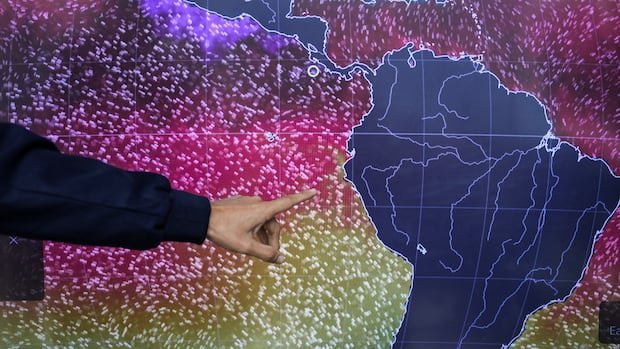

El Niño, the natural phenomenon known for causing irregular climate patterns and raising global temperatures, is expected to reach its peak in several months and persist until next spring according to experts. The current impact of El Niño is already evident both in weather conditions and human responses. Here is a visual representation of how El Niño is currently affecting various regions.
### Panama Canal Experiences Low Water Levels
In Panama, the Panama Canal is witnessing low water levels due to decreased rainfall associated with El Niño. This has prompted the Panama Canal Authority to limit daily transits starting in early September to prepare for an extended El Niño season. Hydrologists like Ricardo Guete are closely monitoring the situation, as seen at the hydrometeorological monitoring station in Gatun Lake.
### Seabird Displacement in Panama
Near the entrance to the Panama Canal, an unusual number of seabirds, including Blue-footed boobies, have been spotted as El Niño warms the eastern Pacific and disrupts marine food supplies. The presence of these birds in large numbers is a sign of the environmental impact of the phenomenon.
### Latin American Preparations for El Niño
Countries across Latin America are taking proactive measures to mitigate the effects of the strengthening El Niño across the Pacific. Governments are mobilizing resources, activating contingency plans, and fortifying essential systems like water, energy, and transportation to address potential threats such as droughts, extreme heat, and flooding in the coming months.
### Indonesia’s Heatwave
In Indonesia, salt farmers in West Java are benefiting from a drought induced by El Niño, while crop farmers are bracing for prolonged heat challenges. A warning from Indonesia’s Meteorology, Climatology, and Geophysics Agency (BMKG) indicates an intense and extended dry season, exacerbating water scarcity issues in various regions.
### Global Concerns and Preparations
As El Niño intensifies, it has already set records for its early-stage intensity, prompting concerns from United Nations officials about the potential for extreme weather events worldwide. Nations like Peru are taking preemptive steps to mitigate risks, with a focus on infrastructure and disaster preparedness to combat the impacts of El Niño.
### Implications for Canada
Models predict a warmer winter than usual for much of Canada due to the influence of El Niño. Regions like British Columbia may experience reduced precipitation and snowpack levels. Additionally, the Atlantic region could see fewer tropical storms as El Niño continues to develop.
The gradual onset of El Niño allows governments to prepare for its adverse effects, unlike sudden natural disasters. It is crucial for nations to stay vigilant and implement strategic measures to safeguard their populations and infrastructure from the potential impacts of this climate phenomenon.