

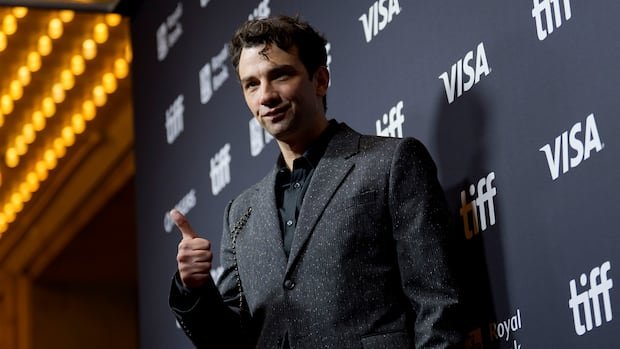

In the midst of escalating tensions between Canada and the United States within the film sector, Canadian actor Jay Baruchel remains optimistic about his country’s ability to compete with its American counterpart. Speaking confidently at the red carpet event prior to the premiere of “The Stunt Driver” at the Toronto International Film Festival (TIFF), Baruchel expressed his belief in Canada’s historical track record of surpassing expectations and navigating challenges successfully.
Joining a cohort of Canadian actors at TIFF who are vocal about their appreciation for the Canadian film industry and the nation as a whole, Baruchel stands out as both an actor and the driving force behind the new film, inspired by stuntman Ken Carter’s real-life story. The film depicts Carter, also known as The Mad Canadian, daringly attempting to leap over the St. Lawrence River in a rocket-powered car during the 1970s, driven by a competitive spirit to outshine his American rival Evel Knievel.
The timing of the film’s premiere amid the ongoing trade dispute between Canada and the U.S. has added an extra layer of significance and energy to the project, as Baruchel emphasized. The cultural clash between the two nations was highlighted when U.S. President Donald Trump recently spotlighted Canada while announcing proposed federal incentives to retain American film productions domestically, sparking concerns within the Canadian film community.
The close relationship between the Canadian and American film industries, established over a century, was underscored by TIFF CEO Cameron Bailey. Bailey noted that the opening film at TIFF, “Being Heumann,” a U.S. production, was filmed in Toronto, exemplifying the enduring ties between the two countries in the realm of cinema.
Amidst the trade tensions, Canadian actors and artists at TIFF expressed a sense of empowerment and determination to champion Canadian creativity. Actress Laurence Leboeuf, portraying Gloria, Ken Carter’s wife in “The Stunt Driver,” emphasized the role of art in reflecting the national identity and individual experiences.
Toronto-born actor Devon Bostick, co-writer of “Closing Night,” which premiered at TIFF, viewed the current period as a “Canadian renaissance,” praising Canada’s vibrancy and resilience. Bostick highlighted the country’s cultural strength and its ability to resist external pressures, contrasting his confidence in Canada’s film industry with uncertainties in the U.S.
Comedian and actress Mary Walsh echoed these sentiments, asserting that the Canadian film industry’s growth and cohesion have been bolstered by external challenges. Walsh, a prominent figure in Canadian comedy, emphasized the importance of supporting and nurturing Canadian cultural productions, viewing the current circumstances as an opportunity for the nation to reaffirm its artistic identity and unity.
In conclusion, amidst the transnational tensions impacting the film industry, Canadian talents at TIFF are channeling their patriotism and creative energies to fortify and celebrate the distinctive qualities of Canadian cinema and culture.