

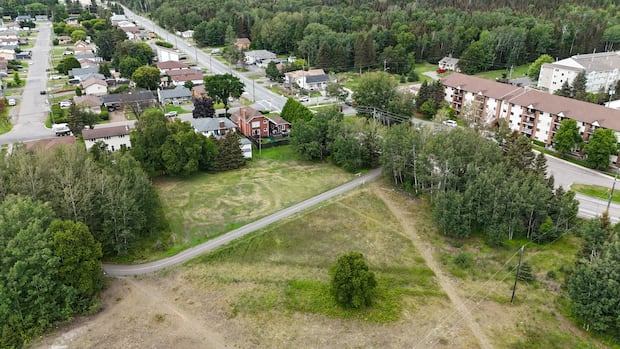

Lori Santink expressed disappointment but not surprise at the city council’s decision to rezone two vacant properties for new housing developments in Thunder Bay, Ontario. The properties, including 791 Arundel St., were sold by the city as surplus land to Terralux General Contractors and Development Limited due to the city facing a shortage of about 1,000 housing units to meet demand.
The approved rezoning will potentially lead to the construction of over 900 new housing units in Thunder Bay, distributed across different locations. The properties at Arundel and Fanshaw streets required rezoning approval, while the Tokio Street property was already appropriately zoned.
Santink criticized the Arundel Street proposal, stating it goes against the city’s Net-Zero Strategy and Climate Adaptation Strategy. She is a member of the grassroots group TBay Greenspace Preservation, which collected over 2,600 signatures in a petition against the development and organized a rally outside city hall with over 100 participants.
The Ontario government’s Bill 60 limits residents’ ability to appeal municipal council decisions through the Ontario Land Tribunal. Santink emphasized the importance of legal support for a potential judicial review of the decisions.
Devon McCloskey, Thunder Bay’s planning services manager, mentioned that the developer is expected to submit applications for site plan control and building permits before commencing construction. The projects have undergone preliminary studies focusing on traffic, transportation, and environmental factors, with extensive public consultation.
Coun. Andrew Foulds, representing the Current River ward, opposed the rezoning of the Arundel Street property but acknowledged the significant public engagement the issue generated.
Leia Minaker, an associate professor at the University of Waterloo, highlighted the challenges communities face in addressing the housing crisis and balancing diverse opinions on development. She emphasized the need for transparent communication about the potential impacts of housing projects.
In Thunder Bay, where housing has been relatively affordable, projections indicate population growth due to economic activities in the region. Santink emphasized the importance of ongoing communication from the city regarding the developments.