

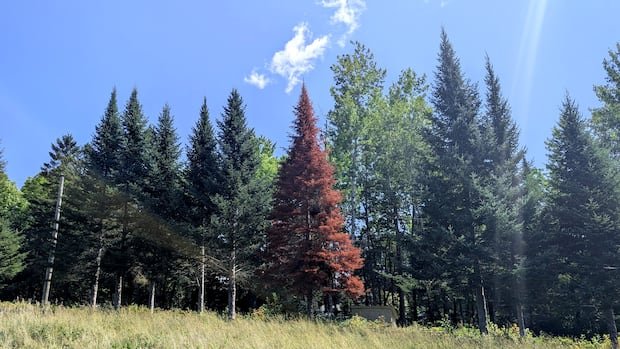

Balsam fir trees in New Brunswick are exhibiting a concerning trend of turning red and dying following a severe drought last summer. This phenomenon has raised alarms about the future of these iconic trees in the province. Professor Anthony Taylor, a forestry researcher at the University of New Brunswick, has been closely monitoring the situation. He has observed firsthand the distressing sight of the once vibrant evergreen trees, often used as Christmas trees, gradually changing color, drying up, and succumbing to death.
According to Taylor, the current scenario aligns with patterns observed in the aftermath of previous hot and dry summers. He explains that the warm and dry conditions, such as the recent drought, negatively impact the growth potential of balsam fir trees. Over the years, Taylor has been studying the impact of climate change on New Brunswick’s forests and notes similar die-offs of balsam fir following exceptionally hot and dry summers in 1986 and 2018.
The adverse effects of drought conditions prompt the trees to halt the photosynthesis process prematurely, hindering their growth. Taylor emphasizes that this interruption in energy production inhibits essential metabolic functions and the synthesis of defense compounds, rendering the trees more vulnerable. The shallow root system of balsam firs further exacerbates the situation by limiting their access to water during dry periods.
Peter McKeil, a woodlot owner, has witnessed the distressing impact of the drought on his trees, noting a gradual reddening of the foliage from the lower branches upwards. The ongoing die-off has led to the loss of approximately 100 trees on his property. Despite salvaging some of the deceased trees for lumber, McKeil has adjusted his harvesting practices to maximize the remaining fir before further losses occur.
Expressing concern for the future of balsam firs in the region, McKeil believes that the species may be facing an inevitable decline, particularly in southern New Brunswick, due to the escalating challenges posed by climate change. Taylor echoes these sentiments, emphasizing the urgent need for climate action to address the visible impacts of a changing climate on the provincial tree.
The striking image of the red and dying balsam fir trees serves as a potent symbol of the environmental challenges posed by climate change. Taylor views this situation as a tangible indicator of the urgent need to transition away from fossil fuels and adopt sustainable practices to mitigate climate change effectively. He hopes that his research will raise awareness and inspire meaningful action to safeguard the future of New Brunswick’s forests.